
Tile Size Guide: How to Choose the Right Tile Size for Every Room?
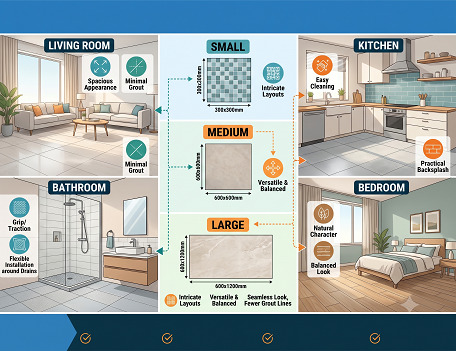
Why Tile Size Matters More Than You Think
Choosing the right tile is about more than colour, texture, or pattern. Tile size can dramatically influence how spacious, balanced, practical, and stylish a room feels. The right dimensions can make a compact bathroom appear more open, give a living room a seamless appearance, or add visual character to a kitchen or feature wall.
With so many options available today, deciding between small, medium, and large tiles can feel confusing. This tile size guide explains how to select the ideal tile dimensions for different rooms while considering space, layout, maintenance, installation, and overall design.
Why Does Tile Size Matter?
Tile dimensions affect both the appearance and functionality of a space. Larger tiles generally create fewer grout lines, resulting in a cleaner and more continuous look. Smaller tiles, on the other hand, can offer greater flexibility for intricate layouts, curves, patterns, and decorative designs.
The ideal choice depends on several factors:
- Size and shape of the room
- Floor or wall application
- Desired interior style
- Amount of natural light
- Maintenance requirements
- Furniture and architectural features
- Installation and cutting requirements
There is no universal tile size that works perfectly everywhere. Instead, the goal is to find a proportion that complements the room.
Understanding Common Tile Sizes
Modern tile collections are available in numerous dimensions, ranging from compact decorative tiles to expansive slabs. Some commonly used standard tile sizes include 300 × 300 mm, 300 × 600 mm, 600 × 600 mm, 600 × 1200 mm, and larger formats.
The right option depends on where the tile will be installed. For example, square tiles can provide a symmetrical appearance, while rectangular tiles can make a room appear longer or wider depending on their orientation. Large rectangular tiles are particularly popular in contemporary interiors because they can create a sophisticated, uninterrupted visual effect.
Recommended Tile Sizes by Room
-
Best Tile Sizes for the Living Room
The living room is often the largest and most visible area of a home, making tile selection especially important. For medium and large living rooms, 600 × 600 mm or 600 × 1200 mm tiles can create an elegant and spacious appearance. Larger dimensions reduce the number of visible grout joints and work particularly well with modern, minimalist interiors.
If your living room has an open-plan layout extending into a dining or kitchen area, using the same flooring throughout can create visual continuity. For a traditional or decorative interior, smaller tiles or patterned designs can add character without overwhelming the space.
-
Choosing the Right Size for Bedrooms
Bedrooms benefit from flooring that feels calm and visually balanced. Medium-to-large floor tiles are often an excellent choice because they create a clean appearance without excessive grout lines. Among commonly available floor tile sizes, 600 × 600 mm is a versatile option for bedrooms and other residential spaces. Rectangular formats can also work beautifully, particularly when the direction of the tile complements the room's proportions.
For bedrooms with wooden furniture or a warm interior theme, wood-look tiles can add natural character while retaining the durability and easy-care advantages of tiles.
-
Ideal Tile Sizes for Kitchens
Kitchens require a combination of practicality and style. Flooring should be durable and relatively easy to clean, while backsplash tiles offer an opportunity to introduce colour, texture, or pattern. For kitchen floors, medium and large-format tiles can minimise grout lines and make routine cleaning easier. For walls and backsplashes, rectangular tiles such as 300 × 600 mm are popular because they can be installed horizontally or vertically.
The layout also matters. Horizontal installation can visually widen a wall, while vertical placement can create an impression of greater height. When selecting kitchen tiles, consider not only appearance but also stain resistance, surface finish, slip resistance, and ease of maintenance.
-
How to Select Tile Size for Bathrooms
Bathrooms require careful planning because they typically contain limited floor area, corners, fixtures, drains, and multiple wall surfaces. For bathroom floors, medium-sized tiles can offer a practical balance between appearance and installation flexibility. Smaller tiles can also be useful in shower areas because additional grout joints may provide better traction, depending on the tile surface and installation design.
For bathroom walls, rectangular tiles are an excellent choice for contemporary interiors. Larger wall tile sizes can create a streamlined appearance with fewer grout joints, while smaller decorative tiles can be used to create feature sections. Always consider drainage slopes and the location of floor drains before selecting very large tiles for wet areas.
When Should You Choose Large Format Tiles?
Large format tiles are increasingly popular in modern residential and commercial interiors. Their expansive dimensions can create a luxurious, seamless appearance and make rooms feel visually less cluttered.
They can work particularly well in:
- Large living rooms
- Open-plan interiors
- Spacious bedrooms
- Commercial spaces
- Feature walls
- Modern kitchens
- Large bathrooms
However, large tiles require a suitably prepared and level installation surface. Their size can also increase cutting complexity around corners, columns, drains, and other architectural elements.
Therefore, don't select a large format simply because it is fashionable. Consider the room's dimensions, installation conditions, and overall design first.
Small Rooms: Are Smaller Tiles Always Better?
Not necessarily.
A common misconception is that small rooms should always have small tiles. In reality, larger tiles can sometimes make a compact room appear more spacious because fewer grout lines create a less fragmented visual surface.
For a small bathroom or compact room, a well-planned medium or large tile can work beautifully. Light colours, consistent flooring, and matching grout can further enhance the sense of space.
However, extremely large tiles may result in excessive cutting in very small or irregularly shaped areas. That's why proportion and layout should always be considered together.
How to Choose the Right Tile Size: A Simple Checklist
Before finalising your selection, use this practical tile size guide:
-
Measure the room
Calculate the length, width, and total area. Note unusual corners, pillars, niches, and openings.
-
Identify the application
Determine whether you need tiles for the floor, wall, backsplash, bathroom, elevation, or another surface.
-
Consider the room proportion
Rectangular tiles can enhance the perceived direction of a space, while square tiles create a balanced appearance.
-
Think about grout lines
More grout lines can create visual texture, while fewer lines offer a cleaner contemporary look.
-
Check installation requirements
The larger the tile, the more important proper surface preparation and professional installation become.
-
Match size with style
Minimalist interiors often suit larger formats, while decorative and traditional designs can benefit from smaller or patterned tiles.
Don't Choose Tile Size by Trend Alone
Interior trends can provide inspiration, but functionality should always come first. A tile that looks impressive in a showroom may not necessarily be the best choice for your specific room.
Think about how the space will be used, how much maintenance it requires, the furniture arrangement, lighting, drainage, and installation conditions.
At Darshan Sales, customers can explore a broad selection of tiles and surface solutions for residential and commercial applications. The collection includes floor and wall tiles along with elevation, parking, designer, imported, wooden, full-body vitrified, Moroccan, and slab tile options.
Find the Perfect Tile Size for Your Space
The right tile size can transform an ordinary room into a visually spacious, coordinated, and inviting environment. From versatile 600 × 600 mm tiles to larger contemporary formats and decorative smaller options, every size has its own design and practical advantages.
The best approach is to consider room size, application, layout, maintenance, installation requirements, and overall aesthetic together rather than selecting a tile based only on its appearance.
If you are planning a new project or renovation, explore different tile options and compare how their dimensions, colours, finishes, and patterns work with your space.
For premium tile options and professional guidance, explore Darshan Sales and choose a solution that combines style, durability, and functionality for your interiors. Contact us for more information!
FAQ’s
Medium or larger tiles can work well in small rooms because fewer grout lines can create a more continuous appearance. However, the final choice should consider the room's shape and the amount of cutting required.
Yes, large tiles can be suitable for bathrooms, particularly on walls and spacious floors. For shower floors, however, tile size should be selected carefully to accommodate drainage slopes and provide appropriate traction.
600 × 600 mm is a versatile format for many residential floors. Rectangular formats such as 300 × 600 mm can also be highly adaptable for walls, backsplashes, and selected flooring applications.
They can. Larger tiles generally have fewer grout joints, which can make a room appear more open and visually continuous. Light colours and coordinated grout can enhance this effect.
Consider the room dimensions, surface type, design style, maintenance, drainage requirements, and installation conditions. Large tiles suit clean contemporary designs, while smaller tiles offer more flexibility for patterns and detailed layouts.


Hi there! 👋
Fill out the form below to start a conversation with us on WhatsApp.
Hi there! 👋
Fill out the form below to start a conversation with us on WhatsApp.